July 17 Column: Aphids in the Garden
Do you despise aphids as much as I do? I’m guessing the answer to that is a resounding “Yes!” In today’s garden column, I talk about the damage they do in our gardens. This includes the veggie and ornamental gardens. I share my methods for dealing with them, or even preventing them altogether.
In addition, I share a very interesting new method that a friend of mine has been testing. I think you’ll be intrigued! You can read my column in today’s edition of The Spokesman-Review: Coverings and worm castings can help keep aphids off plants. Or you can read it underneath the video below.
Which crops are damaged by aphids?
In our vegetable garden, we typically find aphids on our fava bean plants, the corn, and artichokes. I would also get them on our cabbage family crops (i.e., broccoli, cabbage, kale, etc.). Now I use floating row cover or agricultural insect netting over the beds. I originally bought it from agfabric.com but I recently learned their website is now called gardenport.com. over the beds. This prevents aphids and cabbage worms from getting to my plants. I love that! Also, we have a LOT of beneficial insects that are very happy to feast on aphids.
Speaking of which, my friend and colleague Jessica Walliser says we should all “love our aphids” for that very reason. They attract all sorts of beneficial insects to our gardens. I’m not quite ready to love my aphids but I do get her point!
For this week’s video, I share some midsummer vegetable growing tips that I hope you’ll find helpful.
Here is my column:
by Susan Mulvihill
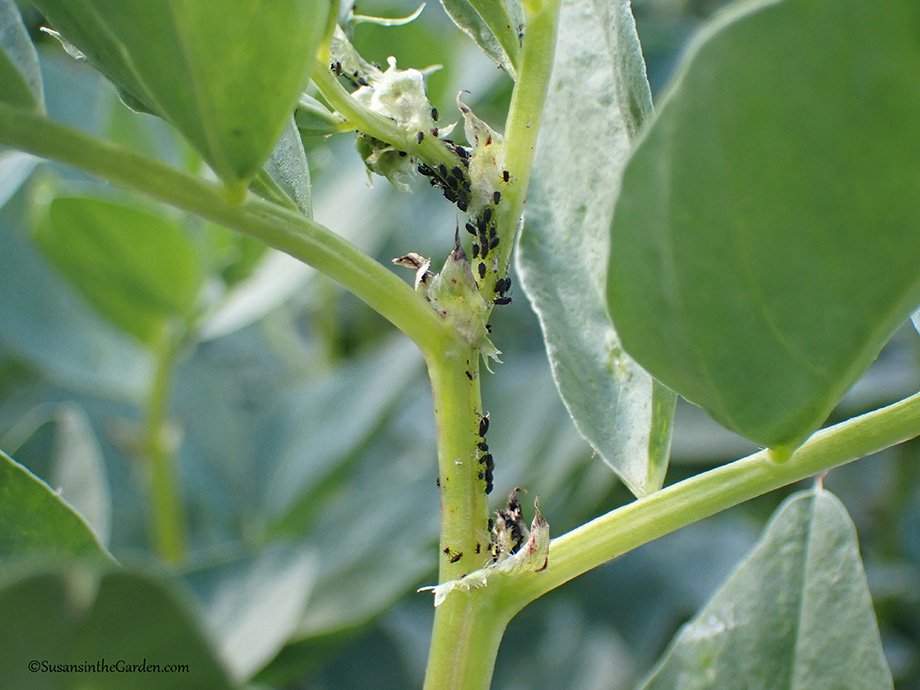
Aphids are one of a gardener’s most dreaded insects. These tiny bugs use their piercing/sucking mouthparts to extract the sap from both ornamental and vegetable plants.
Vegetable and ornamental plants damaged by aphids
Within the landscape, some of their favorites are roses, lupines, honeysuckles, maple trees and viburnums. In the vegetable garden, aphids are drawn to artichokes, beans, cabbage family crops (arugula, broccoli, Brussels sprouts, cabbage, cauliflower, kale, kohlrabi, radishes, rutabagas and turnips), corn and peas.
Signs of their damage include discolored, puckered leaves and a clear, sticky residue that they exude from their feeding activities.
How to control aphids
The great news is that nearly all predatory insects think aphids are delicious. Examples include assassin bugs, big-eyed bugs, damsel bugs, earwigs, ground beetles, hoverflies, lacewings, ladybugs, minute pirate bugs, parasitic wasps, praying mantids, robber flies, soldier beetles and garden spiders.
There are many ways to control aphids without having to resort to chemical pesticides. These include spraying them off plants with a jet of water from your hose or crushing them with your fingers. You can apply an organic product such as horticultural oil, insecticidal soaps, neem oil, plant extracts or pyrethrins. With the exception of plant extracts, the other products are toxic to pollinators. You can still use them, however. Just remember to apply them when pollinators aren’t active, such as early in the morning or late in the day.
It’s also important to avoid the excessive use of nitrogen fertilizers. They they promote the leafy green growth that is a magnet for aphids.
I like to keep things simple. How? By covering my most susceptible crops with floating row cover as soon as I plant the seeds or seedlings. I’m primarily referring to those in the cabbage family. This lightweight fabric acts as a physical barrier that will keep aphids away from these crops.
How worm castings can control aphids
You might be interested to hear about an unusual technique for dealing with aphids. Gabi Tilley brought this to my attention. Tilley is the plant sale co-coordinator for The Friends of Manito. But she’s also an avid gardener who loves trying new methods.
“In my garden, I mostly deal with aphids on lupines, columbines, roses and an ornamental hops vine,” she explained. “While listening to a podcast 3 years ago, I learned that worm castings can be used to control aphids.”
What Tilley found out was that sprinkling worm castings – an organic soil amendment made from earthworm waste – around the base of susceptible plants, it causes them to produce more of an enzyme called chitinase. When insects feed on the leaves, this enzyme breaks down the chitin (a natural polymer) in the bugs’ exoskeletons. And that kills them.
“My hops plant is so big and gets so many aphids every year,” she said. “I bought a bag of worm castings at the garden center and sprinkled a couple of handfuls around its base. Then I watered it in. Within 2 weeks, there wasn’t a single aphid left on it. I have done this for three years now and haven’t had any aphid problems on the hops.”
“This has been a great solution,” she added. “I’m not out to eradicate every aphid in the yard because I know the beneficial insects need to eat them. However, I don’t want a giant mass of aphid stickiness next to my front door.”
North Carolina State University has been conducting research on this topic. It will be interesting to learn more about how this method could help gardeners with particularly challenging insect problems.
Susan Mulvihill is author of “The Vegetable Garden Problem Solver Handbook” and “The Vegetable Garden Pest Handbook.” She can be reached at Susan@SusansintheGarden.com. Watch this week’s video at youtube.com/susansinthegarden.